
Lead
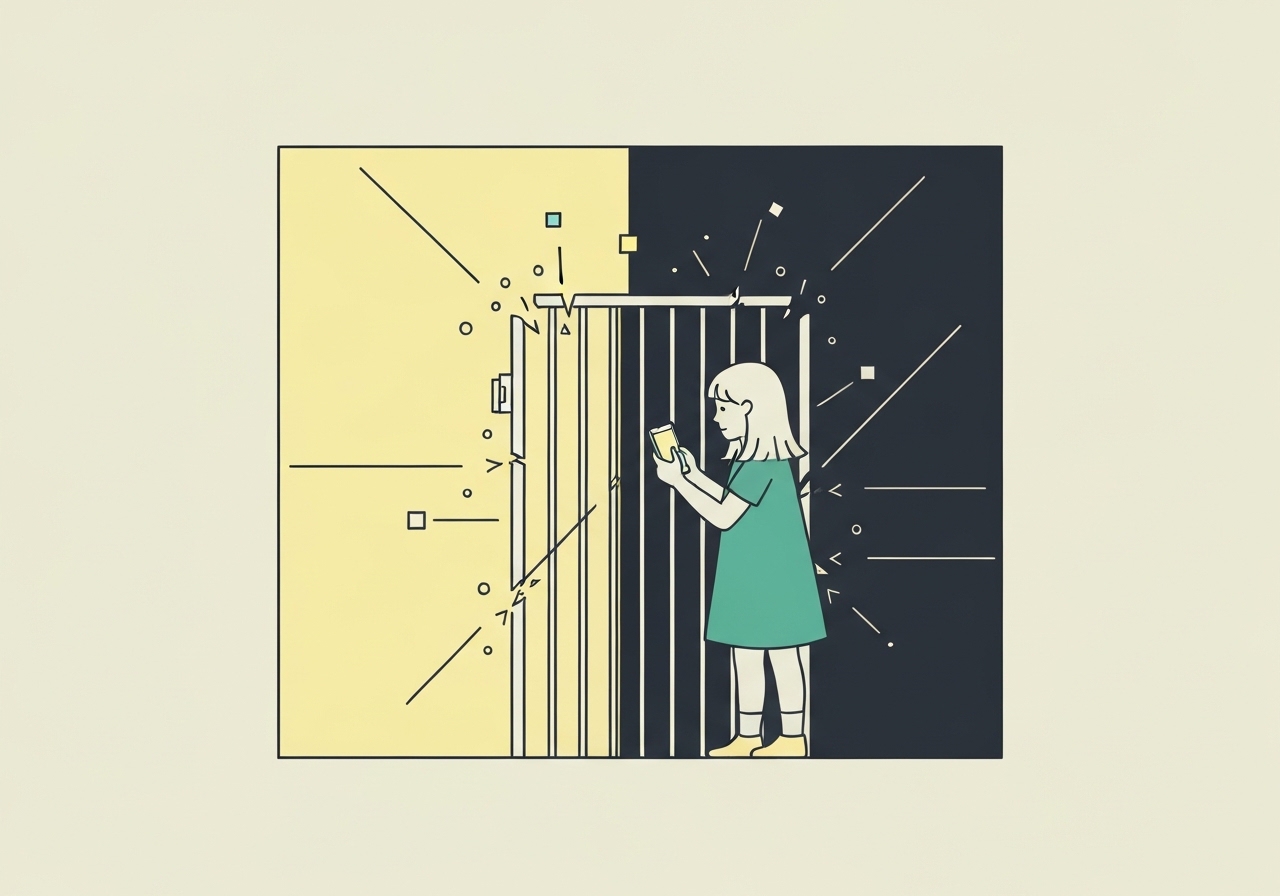
One month after Australia’s Online Safety Amendment Act took effect, the government and tech platforms are testing enforcement and adaptation in real time. The law, implemented in December 2025, requires major services such as Meta’s Instagram, ByteDance’s TikTok, Alphabet’s YouTube, Elon Musk’s X and Reddit to adopt age-verification measures and risks fines up to 49.5 million Australian dollars for noncompliance. Early reports show mixed outcomes: some teenagers report relief from online pressure, while others try technical and social workarounds. Regulators, platforms and parents are still debating whether the policy reduces harm or shifts risks elsewhere.
Key Takeaways
- Scope and penalties: The Online Safety Amendment Act covers major platforms and allows fines up to A$49.5 million (about US$32 million) for failures to take “reasonable steps” to prevent under-16 access.
- Technical measures: Platforms are deploying age checks including facial-estimation selfies, uploaded identity documents, and linked payment data to verify age.
- Account actions: Meta reported it blocked more than 500,000 accounts it identified as under 16 in Australia in the law’s early phase.
- User behaviour: Some teens report reduced screen time and new offline routines; downloads of substitute apps and VPNs rose immediately after the ban but have reportedly settled in recent weeks.
- Industry pushback: Companies including Meta and Reddit are asking for broader measures (notably app-store level enforcement) and some are pursuing legal challenges on grounds of free expression and feasibility.
- International interest: U.K. politicians and some U.S. commentators have expressed interest in similar approaches, pushing the measure into international policy debates.
Background
Concerns about young people’s exposure to addictive design, disrupted sleep and increased stress on social platforms prompted Australia’s government to move beyond content moderation toward access control. Regulators argued that time spent on algorithmic feeds and targeted engagement mechanics contributes to measurable harms for adolescent mental health, building on years of research and public hearings. Industry and civil-liberties groups pushed back during the bill’s passage, warning that broad restrictions could be circumvented and might isolate young people from benign communities and educational content.
Technically, the law does not single out any one verification method; it requires platforms to take “reasonable” steps to ensure users under 16 are not able to access services. That has compelled a range of approaches — from biometric estimation to ID uploads — each with distinct privacy and security trade-offs. Australia is the first country to mandate such a broad, age-based digital access rule, making the rollout a test case for other governments considering similar measures.
Main Event
Implementation began in December 2025 with major platforms beginning staged rollouts of verification tools. Meta, for example, combined automated age-estimation from uploaded selfies with manual document checks in some cases, while TikTok and YouTube announced layered systems meant to reduce friction for adults and block access to under-16 users. Regulators signaled they would evaluate platforms’ compliance, with the A$49.5 million penalty serving as the statutory backstop for inadequate action.
On the ground, teens’ responses have diverged. Some, like a 14-year-old who told a BBC reporter she felt “free” after stopping habitual Snapchat use, have described improved routines and less social pressure. Others sought technical workarounds: initial spikes in downloads for VPN apps and niche social apps such as Lemon8 and Discord were reported in the immediate aftermath, although those spikes appear to have receded according to app-store trackers cited by local outlets.
Platforms and governments quickly entered iterative conversations about scope. Australian regulators asked some smaller apps to self-assess whether they fell under the law; Lemon8 reportedly decided to comply with age restrictions after review. Reddit has escalated by launching a legal challenge, arguing that the law is unworkable and risks curtailing young people’s participation in age-appropriate public discussion.
Analysis & Implications
Practical enforcement raises technical and ethical trade-offs. Biometric and document-based verification can be effective at scale but introduces privacy, data-retention and cross-border transfer risks. Requiring linked payment details may exclude vulnerable young people who lack access to adult financial instruments, creating inequities in who can or cannot participate online.
The policy shifts the locus of responsibility from families to platforms, which may simplify enforcement but concentrates power with global tech companies or state regulators. That concentration may accelerate efforts to standardize age checks across app stores and international jurisdictions, but it could also prompt legal and political resistance on free-speech and privacy grounds, as seen in Reddit’s court filing.
Behavioral substitution is a key near-term effect. If teens migrate to smaller or unregulated apps, private chat platforms, gaming networks, or in-person coordination, harms tied to discoverable public feeds may fall while risks linked to closed networks (such as grooming or radicalization in obscure groups) could rise. Policymakers face a dilemma: reduce certain algorithmic harms while possibly increasing other, harder-to-monitor risks.
Comparison & Data
| Metric | Reported figure | Source |
|---|---|---|
| Maximum statutory fine | A$49.5 million / ~US$32 million | Australian Online Safety Amendment Act (legislation) |
| Accounts blocked (Meta) | Over 500,000 under-16 accounts | Meta (company statement) |
| Public opinion sample (U.S. Fox News poll) | 64% favored a teen social-media ban; two-thirds of parents favored | Fox News (poll) |
These data points illustrate the law’s legal teeth, some early enforcement metrics, and cross-border public appetite for similar measures. However, standardized longitudinal measures of mental-health outcomes, exposure reduction and displacement to alternative services will be required before judging effectiveness.
Reactions & Quotes
“We have blocked more than 500,000 accounts we assessed as belonging to under-16s in Australia, but effective enforcement requires action beyond platform-level checks.”
Meta (company statement)
Meta’s comment highlights the company’s claim that enforcement must include app-store and ecosystem-level cooperation.
“The law could isolate young people from age-appropriate community experiences, including political discussion.”
Reddit (legal filing/statement)
Reddit’s response frames the dispute as one about access to public discourse and practical enforceability.
“I feel freer — I go for a run instead of checking Snapchat after school.”
14-year-old user (reported to BBC)
Voices from teens underscore the mixed subjective outcomes: relief for some, adaptation or circumnavigation for others.
Unconfirmed
- Long-term mental-health impact: It remains unproven whether short-term reductions in platform use will translate into sustained improvements in adolescent mental health.
- Full scope of app substitution: While app-store trackers reported initial spikes for alternate apps and VPN tools, complete migration patterns across private and gaming networks are not yet fully documented.
- Comprehensive compliance among smaller apps: Several smaller services were asked to self-assess; independent audits of full compliance across all app categories are not publicly available.
Bottom Line
Australia’s ban on social media access for under-16s has produced immediate, mixed outcomes: demonstrable platform actions and blocked accounts on one hand, and behavioral adaptation and legal pushback on the other. The law shifts enforcement responsibility to tech companies and forces difficult trade-offs between effective age controls and user privacy, equity and freedom of expression.
Outcomes over the next year — including whether app stores adopt system-level checks, how platforms secure verification data, whether courts uphold legal challenges, and whether measurable health benefits emerge — will determine whether other countries emulate Australia or opt for narrower, more targeted interventions. For policymakers, the critical challenge is aligning technical feasibility, children’s rights and evidence-based measures of harm reduction.
Sources
- CNBC — Coverage of Australia’s social-media ban (news)
- BBC — Reporting on teenagers’ responses to the ban (news)
- The West Australian — Local reporting on app self-assessments (regional news)
- Meta Newsroom — Company statements on age verification (corporate/official)
- Reddit — Legal filings and company statements (corporate/legal)
- Fox News — Polling cited on public attitudes (news/poll)