
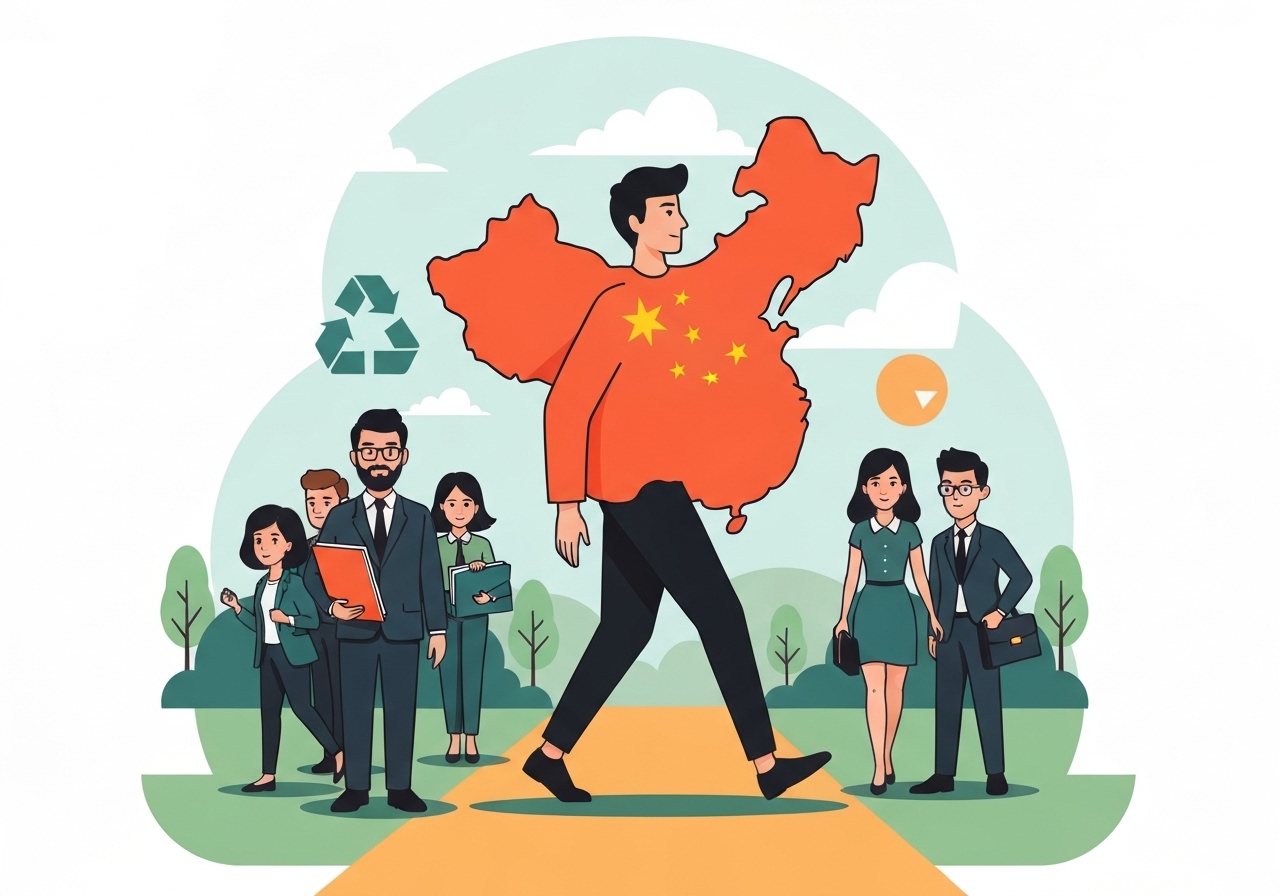
Lead: Green industry leaders at the Fortune Innovation Forum in Kuala Lumpur said this week that China is emerging as a practical leader in climate diplomacy and deployment as the COP30 talks unfold in Belém, Brazil. Their comments came amid an unprecedented U.S. absence from the COP delegation after the administration announced a withdrawal from the Paris Agreement in January. Observers at the forum pointed to a heavy Asian pavilion presence in Belém and concrete Chinese investments in clean energy manufacturing and supply chains. The result, they said, is a shift in both diplomatic influence and the industrial base of the global energy transition.
Key takeaways
- China had a particularly large presence at COP30 pavilions in Belém, signaling stronger diplomatic engagement in multilateral climate talks.
- Industry experts note China produces about 90% of the world s solar panels, roughly 60% of wind turbine components, and around 85% of battery cells, underpinning its role in driving down renewable costs.
- The U.S. national delegation was not present at COP30 following a January withdrawal from the Paris Agreement, though numerous U.S. state and municipal officials attended in their place.
- Business leaders argue the green premium is temporary; scaling renewables and related technologies reduces unit costs and can eliminate that premium over time.
- Regional players from the Global South, especially in Asia, are increasingly visible in climate diplomacy and infrastructure investment decisions.
- Companies such as Sarawak Energy are being engaged by networks like the UN Global Compact Malaysia to accelerate corporate sustainability practices.
Background
The United Nations climate conferences are intended as the venue where governments present mitigation and adaptation plans under the Paris framework. This year s COP30 in Belém has been notable for an unusually strong showing from Asian delegations and pavilions, reflecting shifts in diplomatic initiative. The White House announced a withdrawal from the Paris Agreement in January, a move that removed the federal U.S. apparatus from formal Paris-era negotiation choreography and created space for other actors to increase their visibility.
Historic emissions and capacity mean the United States long played an outsized role in climate finance and rule-setting, but subnational U.S. actors and private-sector participants continue to influence outcomes. At the same time, China s industrial strategy has prioritized scaling manufacturing for solar, wind, batteries and related materials, which has driven down costs globally and altered incentives for clean-energy deployment. These industrial dynamics intersect with geopolitics as emerging economies press for finance, technology transfer, and infrastructure that support decarbonization.
Main event
Speakers at the Fortune Innovation Forum in Kuala Lumpur emphasized that China s COP30 footprint was not merely symbolic. Delegates noted a dense set of Chinese pavilions and delegations engaging on topics from renewables financing to green industrial policy. Industry figures described on-the-ground activity in Belém that combines high-level diplomacy with practical trade and investment discussions, including technology partnerships for renewables and battery supply chains.
Panelists singled out China s manufacturing scale as the lever converting diplomacy into cheaper clean energy options. One executive described how mass production of solar panels and battery cells has compressed costs, creating stronger commercial incentives to adopt renewables in emerging markets. The same panel highlighted the presence of U.S. state and local officials, such as California s governor, who traveled to Belém to represent municipal and subnational interests in the absence of a formal federal delegation.
Business leaders at the forum argued private actors are quick to move when commercial logic and policy incentives align. The UN Global Compact Network Malaysia was cited as an example of a platform that works directly with major regional utilities and firms, including Sarawak Energy, to mainstream corporate sustainability practices. Executives emphasized that when green technologies reach sufficient scale, profitability and policy begin to reinforce rapid adoption.
Analysis & implications
China s growing role in climate diplomacy must be parsed across several dimensions: diplomatic signaling, industrial capacity, and finance. Diplomatic visibility at COP30 gives Beijing more voice in setting agendas and forming coalitions, especially among countries in the Global South seeking technology and infrastructure support. That influence is reinforced by China s ability to offer concrete industrial partnerships that materially lower deployment costs for clean energy projects.
Economically, China s dominance in key manufacturing segments compresses the green premium and shifts the cost curve for global decarbonization. When a single producer or set of firms supplies large shares of solar modules, wind components, and battery cells, the resulting economies of scale reduce unit costs and accelerate diffusion. This dynamic can re-orient investment flows toward renewables and away from fossil-based options, particularly in developing markets where upfront cost is a primary barrier.
Geopolitically, the shift raises questions about dependencies and resilience in critical supply chains, from rare earths to battery precursors. Policymakers and firms will need to balance the efficiency gains of concentrated production with diversification strategies that reduce strategic vulnerability. For recipient countries, Chinese-led projects may offer quicker deployment but also require scrutiny around financing terms, standards, and local-capacity building.
Comparison & data
| Segment | Estimated Chinese share |
|---|---|
| Solar panel manufacturing | ~90% |
| Wind turbine components | ~60% |
| Battery cell production | ~85% |
Those figures illustrate how manufacturing concentration can drive down costs: high market share in components translates into scale benefits in research, supply logistics, and capital deployment. The table does not quantify rare earths, where China holds a dominant position in processing and refining stages; exact percentages vary by mineral and stage of value chain. Policymakers monitoring this transition are paying attention to both cost and strategic concentration.
Reactions & quotes
Panelists and participants responded to the observed shifts with a mix of affirmation and caution. Representatives from industry networks highlighted practical collaborations, while some observers warned of over-reliance on any single supplier or diplomatic lead.
When there s a vacuum, something or someone will fill it. In the climate leadership space, we now see many countries from the Global South stepping up.
Faroze Nadar, Executive Director, UN Global Compact Network Malaysia and Brunei
Before Nadar s remark, speakers described the practical work the UN Global Compact does with regional utilities to translate commitments into projects. After the quotation, forum attendees pointed to Sarawak Energy as an example of a state-linked company partnering on sustainability initiatives with international networks.
(China) is not just talking, it s walking the walk.
Ying Staton, Chief Sustainability Officer & Vice President, Asia Pacific, Plastic Energy
Staton s comment followed a discussion on how manufacturing scale reduces the green premium and increases market viability for clean technologies. Forum participants used the line to summarize a broader point: delivery of low-cost renewables matters as much as diplomatic posturing.
Scale is the key; green technologies need to be built at volume so businesses can adopt them without sacrificing profitability.
Aiying Wang, President & CEO, Greater China, SEA and India, Envac AB
Wang s contribution framed scale as the commercial condition for a sustainable transition, a theme echoed across the panel and in private conversations with investors present at the forum.
Unconfirmed
- Whether China s larger pavilion presence at COP30 will translate into legally binding finance commitments remains unclear and depends on subsequent bilateral and multilateral negotiations.
- Reports that China controls a specific percentage of every stage of rare earth processing are variable; further verification of exact shares by mineral and processing stage is needed.
- The long-term impact of the U.S. federal withdrawal on global climate governance will depend on future policy shifts and the scale of subnational and private-sector engagement.
Bottom line
Industry leaders at the Fortune forum concluded that China s combination of diplomatic engagement and deep industrial capacity is reshaping parts of the global climate agenda. That influence is reinforced by the company-level economics of scale: as production expands, renewable solutions become cheaper and more accessible to developing economies.
At the same time, new dependencies and strategic risks accompany concentration in manufacturing and processing. Governments and corporations should pursue a dual strategy of leveraging cost reductions while building diversified, resilient supply chains and transparent finance terms. For observers, the immediate takeaway is that climate leadership is increasingly multi-polar and that practical delivery of low-cost technologies will determine who benefits from the energy transition.
Sources
- Fortune (media report on forum and COP30)
- UNFCCC / COP30 (official UN climate conference information)
- UN Global Compact (official network and statements)
- Plastic Energy (industry organisation)
- Envac AB (company profile)
- Sarawak Energy (regional utility partner)