
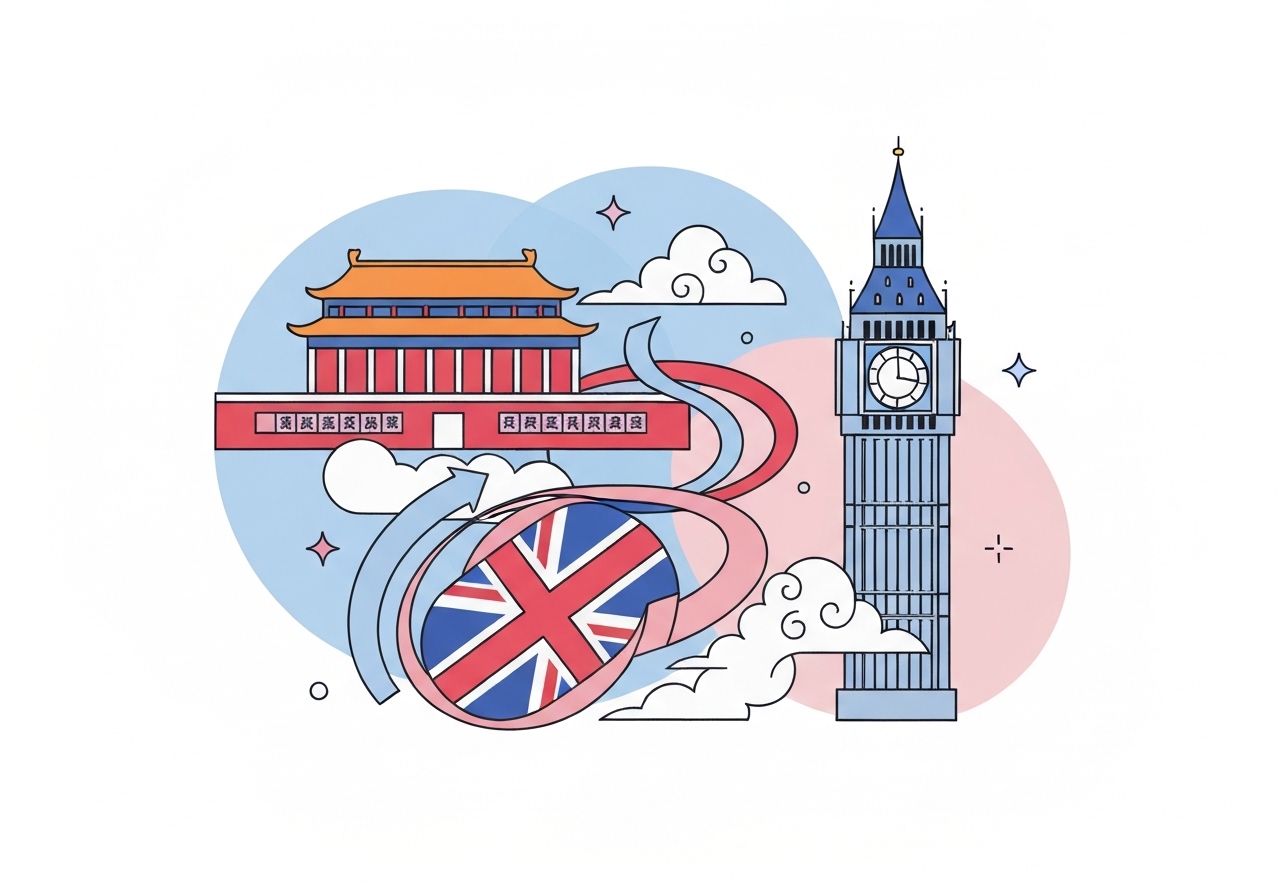
British Prime Minister Keir Starmer arrived in Beijing on a four-day visit that began in late January 2026 and met Chinese President Xi Jinping in a high-stakes summit that both sides framed as the start of a strategic reset. The two leaders agreed to expand cooperation across education, healthcare, finance, AI research, biological sciences and new energy, and Beijing said it would consider visa-free entry for British nationals. The meeting follows years of bilateral friction — including U.K. security concerns, disputes over Hong Kong and recent government actions against Chinese tech firms — but both governments described the summit outcome as positive and pragmatic.
Key Takeaways
- Keir Starmer is on a four-day trip to China, the first visit by a U.K. prime minister in eight years, and met Xi Jinping in Beijing in late January 2026.
- Both governments announced plans to expand cooperation in education, healthcare, finance, AI research, biological sciences and new energy development.
- Beijing said it would “consider” visa-free entry for British nationals; London reiterated it will maintain high-level communications while guarding national security.
- The U.K. has recently tightened scrutiny on Chinese activity and in December moved against two China-based tech firms over alleged cyberattacks that threatened U.K. security.
- A British Chamber of Commerce in China survey (December) found nearly 60% of more than 300 British firms said doing business in China was harder than a year earlier.
- The U.K. trade deficit with China rose more than 18% year-on-year to £42 billion ($58.1 billion) in the 12 months ending June 2025, per U.K. government data.
- Starmer framed the visit as an effort to build a “more sophisticated relationship” that allows continued dialogue on collaboration and security.
Background
Relations between China and the United Kingdom deteriorated over the past decade amid mounting security concerns, disagreements over Hong Kong policy and worries from U.K. businesses about regulatory unpredictability. London has publicly described certain Chinese activities as a long-term strategic challenge and has pursued measures to limit perceived espionage and cybersecurity threats. In December 2025 the British government announced actions against two China-based tech companies it said had undermined U.K. security and prosperity, reflecting a tougher posture on sensitive technologies.
At the same time, economic interdependence has remained substantial: trade flows and investment ties continued despite political friction, and many U.K. firms still view China as a major market even as expansion plans have become more cautious. Beijing has hosted several Western leaders recently, and some allied governments have sought to diversify trade and diplomatic engagements amid uncertainty in relations with the United States. The combination of geoeconomic incentives and strategic mistrust set the stage for a calculus in London to pursue managed engagement rather than decoupling.
Main Event
The summit in Beijing brought Xi and Starmer together for bilateral talks described by both sides as constructive. According to the Chinese readout and British statements, discussions focused on pragmatic cooperation areas — from higher education and healthcare exchanges to scientific partnerships in AI and biological sciences. Starmer opened the meeting by stressing the need for a “more sophisticated relationship” to identify collaborative opportunities while addressing differences, per Reuters reporting referenced by both governments.
Chinese state media published a summit statement outlining the joint approach and the list of sectors where cooperation would be expanded. Beijing also urged the U.K. to provide a fair, non-discriminatory environment for Chinese companies operating in Britain, and noted it would consider easing entry rules for British nationals. London emphasized it would remain vigilant on security but sought a strategic, consistent relationship that supports trade and investment growth.
On the sidelines, Starmer addressed a business delegation and encouraged British companies to identify opportunities in the world’s second-largest economy. The U.K. government reaffirmed plans to deepen trade and investment ties while retaining high-level communications with Beijing. The summit followed announcements such as approval for a new, larger Chinese embassy in London and ongoing discussions in British institutions about how to manage bilateral risk.
Analysis & Implications
The summit signals a deliberate shift by the U.K. toward managed engagement: policymakers appear to be balancing economic opportunity against security concerns. By pairing explicit cooperation pledges with continued scrutiny of Chinese actors, London is attempting to avoid binary choices between confrontation and unconditional openness. This posture aims to protect critical infrastructure and sensitive technology while allowing non-sensitive commercial and scientific ties to proceed.
Economically, deeper cooperation in finance, education and new energy could ease pressures on U.K. exporters and investors, but the benefits will depend on implementation details and regulatory certainty. British firms surveyed by the British Chamber of Commerce in China cited regulatory unpredictability and an economic slowdown as headwinds; improving those conditions would be necessary to translate diplomatic progress into measurable corporate gains.
Strategically, the reset may reshape alliances and trade patterns. Starmer’s visit came as U.S. foreign policy under President Donald Trump has unsettled some allies, and other Western capitals have recently engaged Beijing. If London normalizes channels while preserving security guardrails, it could encourage similar calibrated approaches among other democracies balancing economic ties with strategic rivalry concerns.
Comparison & Data
| Metric | Figure | Source |
|---|---|---|
| U.K. trade deficit with China (12 months to Jun 2025) | £42 billion (+18% YoY) | U.K. government data |
| British firms reporting a tougher business environment | Nearly 60% of >300 firms | British Chamber of Commerce in China (Dec 2025) |
| U.K. prime minister visit duration | 4 days (first PM visit in 8 years) | British government statements |
The data show a substantive economic relationship that has become more strained: trade values remain large but the business climate is viewed as increasingly difficult by many U.K. firms. These figures help explain why London seeks a framework that sustains commercial ties while addressing national-security vulnerabilities. Translating diplomatic language into regulatory reform, market access assurances and clearer dispute-resolution pathways will be key to altering firm-level perceptions.
Reactions & Quotes
U.K. officials framed the meeting as constructive and forward-looking, stressing both opportunity and caution. After the summit, Starmer told reporters the talks were “positive” and produced a “productive outcome,” describing the relationship as being in a “good, strong place” according to media readouts.
“It is vital that we build a more sophisticated relationship that allows us to identify areas for collaboration and dialogue.”
Keir Starmer (reported by Reuters)
Chinese commentary emphasized global governance themes and called for cooperation among major powers. State media quoted Xi warning against unilateralism and protectionism and arguing that leading economies should uphold international law to avoid a regression to “a jungle-like world,” language reflected in official Chinese translations.
“Unilateralism, protectionism and power politics have been rampant, severely impacting the international order.”
Xi Jinping (Chinese state media statement)
Business groups reacted cautiously: the British Chamber of Commerce in China reiterated concerns about a complex and often unpredictable landscape for firms in China, urging clearer rules and transparency to restore confidence. Corporate leaders on Starmer’s delegation were encouraged to pursue practical partnerships but noted existing regulatory and macroeconomic headwinds.
Unconfirmed
- Details and timeline for any potential U.K. visa-free entry for British nationals have not been published and remain subject to further negotiation.
- The identities and full technical details of the two China-based tech companies targeted in December were not specified in the public summary and remain partially undisclosed in official statements.
- Some media descriptions referenced visiting Western leaders with titles or names that require independent verification; for example, attributions around a “Canadian Prime Minister Mark Carney” appear inconsistent with public records and should be treated cautiously.
Bottom Line
The Starmer-Xi summit in Beijing represents a deliberate London effort to recalibrate Britain’s China policy: pragmatic engagement paired with explicit security vigilance. For British businesses, diplomatic thawing could ease openings in sectors like higher education, finance and new energy, but deeper commercial gains will depend on concrete regulatory clarity and consistent market access.
Policymakers in the U.K. and allies will watch implementation closely: the credibility of this reset rests on whether cooperation pledges translate into clear rules that protect sensitive technologies while permitting non-sensitive collaboration. In the near term, the outcome is best viewed as a managed experiment rather than a full normalization of relations.
Sources
- CNBC (news organization) — primary report of the summit and government readouts.
- Financial Times (news organization) — reporting cited on U.K. plans for tighter scrutiny of Chinese activity.
- Reuters (news agency) — cited for leader quotes and diplomatic context.
- British Chamber of Commerce in China (business association) — survey results on the business climate in China.
- U.K. Government (official) — source for trade statistics and official statements.