
Lead
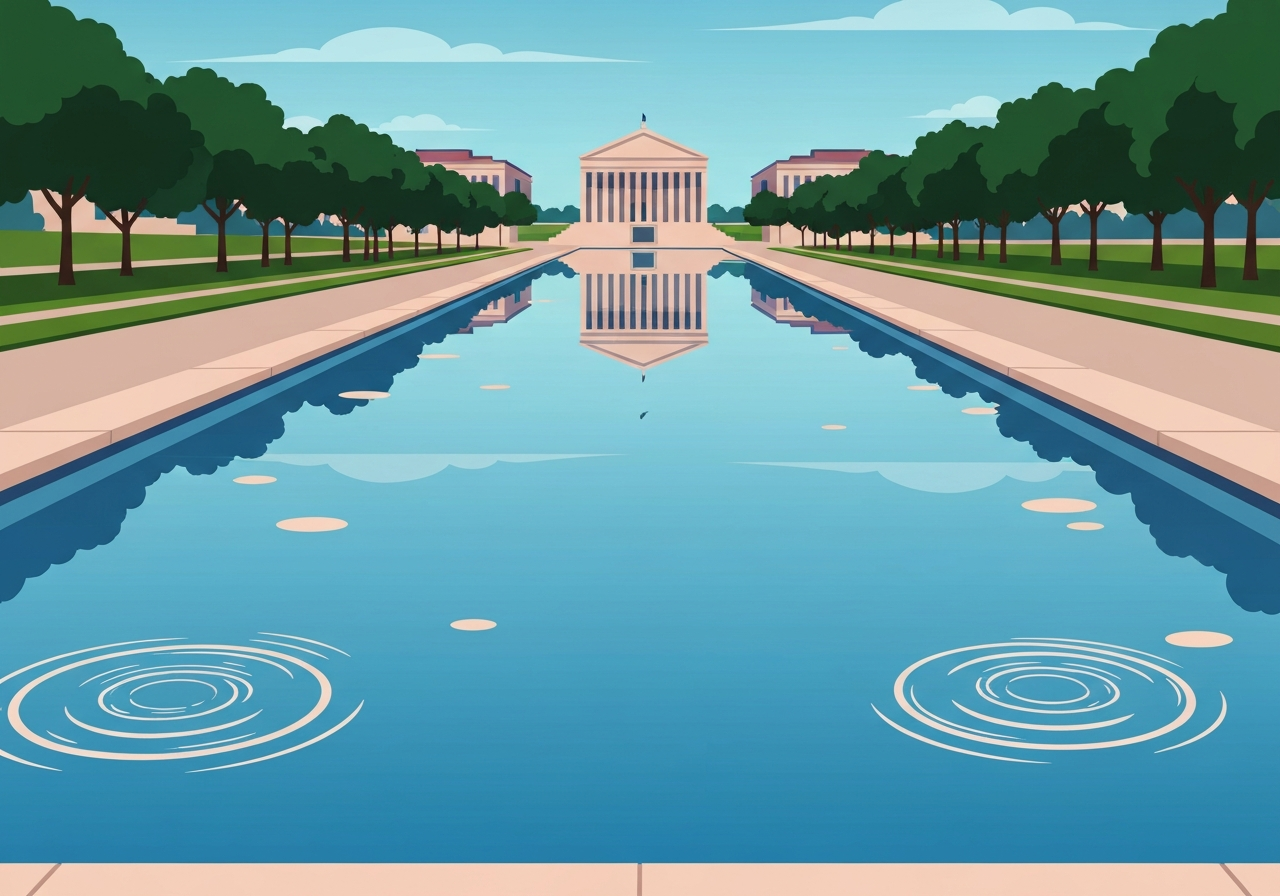
Workers refilled the Lincoln Memorial Reflecting Pool on Friday after a weeks-long resurfacing and repainting project that briefly closed the landmark. The 2,028-foot shallow basin began collecting water under clear skies as neighbors, tourists and joggers gathered to watch. Many observers said the pool’s newly darkened floor looks only subtly different from before, even as the administration highlights repairs intended to stop leaks. Lawsuits and questions about the scope and cost of the work have followed the project.
Key Takeaways
- The Lincoln Memorial Reflecting Pool, 2,028 feet long, was refilled Friday after a resurfacing and repainting process that began in late April.
- The basin’s floor was darkened to what the president described as “American flag blue,” though many visitors described the finished look as gray or nearly black rather than bright blue.
- The pool first opened in 1923 and saw major renovation work from 2010–2012; the recent work was pitched as sealing cracks and removing debris to reduce future leaks.
- President Trump initially estimated about $2 million for the project, but Interior records show a planned $13.1 million contract with Atlantic Industrial Coatings.
- The Cultural Landscape Foundation sued in mid-May, arguing required historic-preservation reviews were bypassed; a judge had not issued a final ruling before the administration declared the work complete.
- Officials say multiple funding streams exist for park maintenance; independent reporting indicates at least $90 million in park-fee revenue has been redirected to other D.C. projects.
- The work was carried out in the run-up to the nation’s 250th anniversary and coincided with other fountain and monument restorations around the capital.
Background
The Lincoln Memorial Reflecting Pool, stretching along the National Mall and first filled in 1923, has long been a defining visual axis in Washington. Its shallow length makes it vulnerable to pipe failures, leaks and sediment buildup; a two-year renovation finished in 2012 at an estimated cost of $34 million funded through stimulus dollars. Over recent years the pool continued to need frequent maintenance and periodic refills, a recurring cost for the National Park Service.
This spring, the White House accelerated a program of public-space restorations across D.C. ahead of the 250th anniversary celebrations around July 4. That push included fountain repairs and other aesthetic projects, some funded or supported by National Guard labor. The resurfacing of the reflecting pool became prominent after initial coats of paint produced a noticeably darker floor that drew public attention and criticism.
Main Event
Work crews completed resurfacing and repainting the pool in early June, then began the slow replenishment of water on Friday morning. Under bright sun, the central channel filled first, creating a narrow strip deep enough to reflect the Washington Monument; a worker in the basin used hoses to direct flows as tourists snapped photos from the memorial steps. Observers ranged from daily runners checking progress to families visiting for the weekend.
The administration framed the project as both cosmetic and functional: sealing small crevices in stone to reduce leaks and removing accumulated trash. The president has publicly characterized the pool’s prior appearance as dingy and pledged lasting repairs. Interior Department officials told reporters the resurfacing was intended to reduce the frequency of costly refills.
Some residents and visitors immediately welcomed the water’s return and the ducks that frequent the pool, while others said they could not easily detect the change in color at partial fill. Early renderings and the first paint layers prompted alarm among preservationists and the public; after more water entered the basin many said the effect was less dramatic than initially feared.
Analysis & Implications
The resurfacing underlines tensions between rapid beautification initiatives and established historic-preservation procedures. The Cultural Landscape Foundation’s lawsuit claimed the project circumvented required federal reviews; that challenge highlights how accelerated schedules—especially tied to high-profile events—can collide with statutory safeguards meant to protect historic fabric. If judges find procedural lapses, the ruling could constrain future emergency-style interventions on National Mall assets.
Budget questions matter politically and operationally. A widely cited contract figure of $13.1 million for Atlantic Industrial Coatings contrasts with the president’s public $2 million estimate. Even if some expenses are drawn from nontraditional sources—endowments, pass revenues or internal Park Service funds—the discrepancy fuels debate over transparency and priorities for maintenance spending.
Technically, a painted or sealed basin can reduce seepage and lower short-term refill frequency, but it is not a guaranteed long-term fix for underlying pipe or infrastructure failures. Park officials have not published an independent engineering assessment showing the resurfacing alone will eliminate plumbing repairs. If the work delays further major rehabilitation, deferred capital needs may persist and costs could reemerge later.
Comparison & Data
| Item | Reported Amount |
|---|---|
| Length of reflecting pool | 2,028 feet |
| Administration public estimate | $2 million |
| Interior record / contract | $13.1 million |
| 2010–2012 renovation funding | $34 million (stimulus funds) |
| Park-fee diversion reported | At least $90 million |
The table summarizes the key numerical points under discussion: the pool’s dimensions, competing cost figures, past renovation spending and reporting on diverted park fees. Those numbers show how headline costs can vary by source and by what expenses are included—surface work, underlying infrastructure, security and associated labor all move totals differently. Readers should note the $13.1 million figure comes from Interior procurement records and the $90 million figure has been reported in press accounts about fee reallocations.
Reactions & Quotes
“The water will start to flow in … and it’s going to be beautiful,”
President of the United States (remarks reported by press)
Officials emphasized the refurbishing as a visible improvement ahead of national celebrations; the president’s brief comments framed the work as both patriotic and restorative.
“I’m just happy it’s not that bright blue that we saw the first days,”
Local runner and resident (on condition of interview)
Several frequent visitors said early coats looked alarming but that the pool’s appearance softened as it filled; reactions ranged from approval of cleanliness to skepticism about necessity.
“These improvements are being completed using your fee dollars,”
National Park Service (construction sign)
Signage at the site said park-fee revenues are being used; officials pointed to multiple funding streams though public accounting for the project remains a focal point for reporters and watchdogs.
Unconfirmed
- The administration’s claim that the resurfacing will last “50 to 100 years” has not been independently verified by engineering reports made public.
- It is not yet confirmed how much of the $13.1 million contract (if fully paid) will be covered directly by taxpayer funds versus endowments, pass revenue or other sources.
- Whether all underlying broken pipes were fully addressed as part of this resurfacing was not specified by Interior engineers and remains unclear.
Bottom Line
The reflecting pool project combined visible, symbolic change with practical maintenance claims, but public reaction has been muted: after weeks of attention, many visitors say the finished basin looks only slightly different. The controversy has shed light less on color than on process—how decisions are made, who pays and whether historic-review rules were observed when schedules accelerate for milestone events.
Going forward, the key areas to watch are (1) any court decisions on the preservation suit, (2) transparent accounting of project costs and funding sources, and (3) follow-up engineering assessments that confirm whether the resurfacing materially reduces leaks and long-term maintenance obligations. For now the pool is full and the Mall’s axis is restored to its familiar view; the administrative and legal questions raised by the work may persist longer than the water’s return.
Sources
- NPR — (news report)
- The New York Times — (news reporting on Interior records)
- The Washington Post — (news reporting on park-fee reallocations)
- U.S. Department of the Interior — (official agency)
- The Cultural Landscape Foundation — (nonprofit / preservation group)