
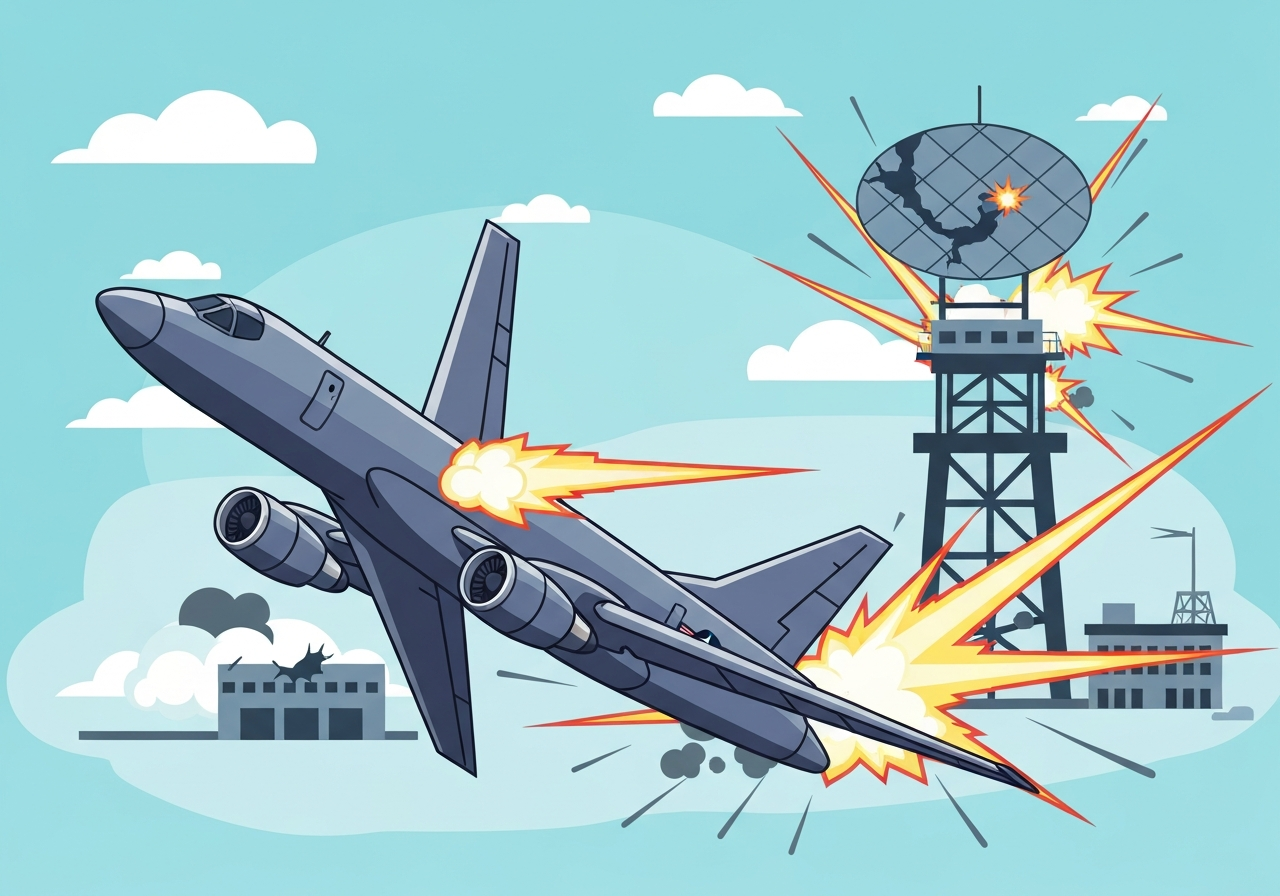
Lead: On June 6, 2026, U.S. Central Command (CENTCOM) said American forces shot down four Iranian one‑way attack drones and then struck coastal radar sites on Qeshm Island and Goruk in what it described as an act of self‑defence. The strikes followed an alleged drone launch toward commercial traffic in the Strait of Hormuz and were accompanied by reports of explosions and air‑defence activity on Kharg Island. CENTCOM said the actions were intended to prevent additional attacks; Iranian and independent confirmation of all strike locations and damage remains incomplete. The incident adds urgency to fragile US‑Iran negotiations and has immediate implications for Gulf maritime security and energy markets.
Key takeaways
- CENTCOM said U.S. forces shot down four Iranian one‑way attack drones on June 6, 2026; it characterized those drones as an immediate threat to shipping in the Strait of Hormuz.
- U.S. strikes targeted coastal surveillance radar sites on Qeshm Island and Goruk, according to CENTCOM, described as measures to prevent further drone attacks.
- Explosions and activated air‑defence systems were reported on Kharg Island in the northern Persian Gulf; Kharg hosts terminals that handle roughly 90% of Iran’s oil exports.
- Iranian state media and some regional outlets reported clashes and missile/drone activity; CENTCOM denied Iranian navy fired on U.S. warships and said U.S. vessels continue operating in regional waters.
- The events come amid stalled ceasefire negotiations and a separate diplomatic track around $24 billion in frozen Iranian assets that Tehran says is a trust test for any deal.
- Global oil benchmarks reacted to the escalation: Brent traded near $95 a barrel and WTI around $93 as markets weighed supply risks.
Background
The Strait of Hormuz is one of the world’s most important maritime chokepoints, with a large share of global crude transit passing through its waters. Since the wider US‑Iran conflict escalated earlier this year, the waterway has been repeatedly targeted by missiles, limpet mines and drones, prompting a U.S. naval blockade of some Iranian southern ports and heightened rules of engagement for commercial shipping. Prior incidents in early June included Iranian missile and drone strikes that hit facilities in Kuwait and Bahrain, and at least one reported death at Kuwait’s main airport.
Diplomatic efforts to end direct hostilities have continued in parallel. Washington and Tehran have discussed a potential agreement that would address reopening the Strait, removing mines, and sanctions relief — including Tehran’s demand for the release of about $24 billion in frozen assets. Those talks have been intermittent and fragile; Iran‑backed groups such as Hezbollah have complicated the picture by rejecting some US‑brokered proposals for a truce with Israel in Lebanon. Regional actors and global markets have monitored each development closely because small tactical moves can rapidly alter prices and supply routes.
Main event
According to CENTCOM updates on June 6, U.S. forces intercepted four Iranian one‑way attack drones launched toward the Strait of Hormuz and subsequently struck coastal radar and surveillance installations on Qeshm Island and at Goruk to prevent further attacks. CENTCOM framed the strikes as defensive and necessary to protect maritime traffic, stating American forces remained vigilant and prepared to act to defend shipping lanes.
Separately, multiple sources reported explosions and activation of air‑defence systems on Kharg Island in the northern Persian Gulf; Kharg is home to major oil export infrastructure and export terminals. Those reports — including a regional newsletter and local outlets — said the area was struck, but independent verification and official Iranian confirmation of damage levels were not available at the time of reporting.
Iranian state media earlier claimed its navy had fired warning shots and used missile and drone systems to press U.S. destroyers (reported designations DDG‑103 and DDG‑87) to depart the Sea of Oman. CENTCOM denied those claims on X (formerly Twitter), stating Iranian forces did not fire on U.S. warships and that any such action would violate the ceasefire. The competing statements underline the difficulty of reconciling battlefield claims in near‑real time.
Analysis & implications
Operationally, strikes on radar and coastal surveillance nodes degrade an adversary’s ability to coordinate additional unmanned or missile attacks and to cue follow‑on strikes. Removing or disrupting coastal radar on Qeshm and Goruk would complicate Iran’s ability to surveil and prosecute small, low‑altitude one‑way drones that have been used to threaten shipping and regional air traffic. That said, such actions also raise thresholds for escalation: Tehran may see targeted destruction of sensors as a significant provocation requiring a calibrated response.
Politically, the incident will test fragile diplomatic channels. Tehran has tied progress toward a broader arrangement to monetary concessions and guarantees, including the release of roughly $24 billion in frozen funds. Each kinetic episode makes trust‑building harder — other parties to negotiations (regional governments, mediators and international organisations) will likely step up shuttle diplomacy to prevent broader escalation that could disrupt oil flows and heighten humanitarian and security pressures in Lebanon, Gaza and beyond.
For markets and global logistics, the immediate risk is twofold: actual damage to export terminals (Kharg) and the psychological impact of renewed strikes on insurer risk ratings and shipping detours. Even short interruptions to flows through the Gulf can push Brent toward or above the mid‑$90s per barrel, amplify freight costs, and reroute cargoes via longer passages such as around Africa, raising transit times and energy prices.
Comparison & data
| Event | Date | Reported effect |
|---|---|---|
| U.S. strikes on Qeshm & Goruk (radar) | June 6, 2026 | CENTCOM: strikes to prevent further drone attacks; damage unverified independently |
| Explosions / air‑defence activation on Kharg Island | June 6, 2026 | Local reports: strikes/explosions; Kharg exports ~90% of Iran’s oil |
| Iran missile/drone attack on Kuwait & Bahrain | June 5, 2026 | At least 1 killed, dozens injured at Kuwait airport (reported) |
| Brent crude | June 5–6, 2026 | Trading near $95/bbl; WTI near $93/bbl |
These datapoints show the rapid back‑and‑forth between kinetic incidents and market reactions: localized strikes or threats in the Gulf translate quickly into price volatility and shipping advisories. The table summarizes confirmed dates and reported impacts; damage and casualty figures for the most recent strikes remain in flux pending independent verification.
Reactions & quotes
Responses quickly split along official and political lines. CENTCOM issued a concise operational justification on social media and its channels; U.S. policymakers framed the strikes as defensive measures to protect commerce and forces.
“US forces subsequently struck Iranian coastal surveillance radar sites in Goruk and on Qeshm Island to defend against further attacks,”
CENTCOM (official statement on X)
President Donald Trump’s public remarks added a political overlay, reiterating a hard line on military thresholds and the use of force if U.S. troops are harmed.
“If they killed US troops, it would be a good reason to do so… there is no navy, no air force, we have wiped out their leadership,”
U.S. President Donald Trump (remarks to reporters)
Lebanon’s president pushed back against Iran’s regional role and warned of the local costs of the wider conflict.
“You are not trying to help us … the people of Lebanon are paying the price … for the sake of your own interest,”
Lebanese President Joseph Aoun (interview with CNN)
Unconfirmed
- Reports that U.S. strikes hit Kharg Island have not been independently verified; Iranian authorities had not publicly confirmed precise damage levels at the time of reporting.
- Claims that the Iranian navy fired on or near U.S. destroyers (DDG‑103, DDG‑87) were denied by CENTCOM and remain contested.
- Detailed casualty figures or damage assessments for the Qeshm and Goruk radar sites have not been released by either side and are pending on‑the‑ground verification.
Bottom line
The June 6 strikes illustrate how quickly tactical events at sea—drones, coastal sensors and targeted strikes—can influence strategic trajectories. CENTCOM’s account frames the strikes as narrowly defensive, aimed at protecting commercial shipping and U.S. forces; Tehran and regional actors may interpret the same actions as escalation, which raises the risk of retaliatory measures elsewhere in the theatre.
Near term, the most important indicators to watch are independent damage assessments from neutral observers, movements of commercial shipping around the Strait of Hormuz, and whether negotiations over frozen assets and a broader ceasefire resume with tangible concessions. For markets and humanitarian actors, even limited disruptions at Kharg or further attacks on shipping could constrict supply and deepen civilian hardship in neighbouring conflict zones.
Sources
- Hindustan Times — news outlet (original live updates)
- U.S. Central Command (CENTCOM) — official statements and social posts (official)
- Reuters — international news agency (press)
- CNN — international news organisation (press)
- Al Jazeera — regional news organisation (press)