
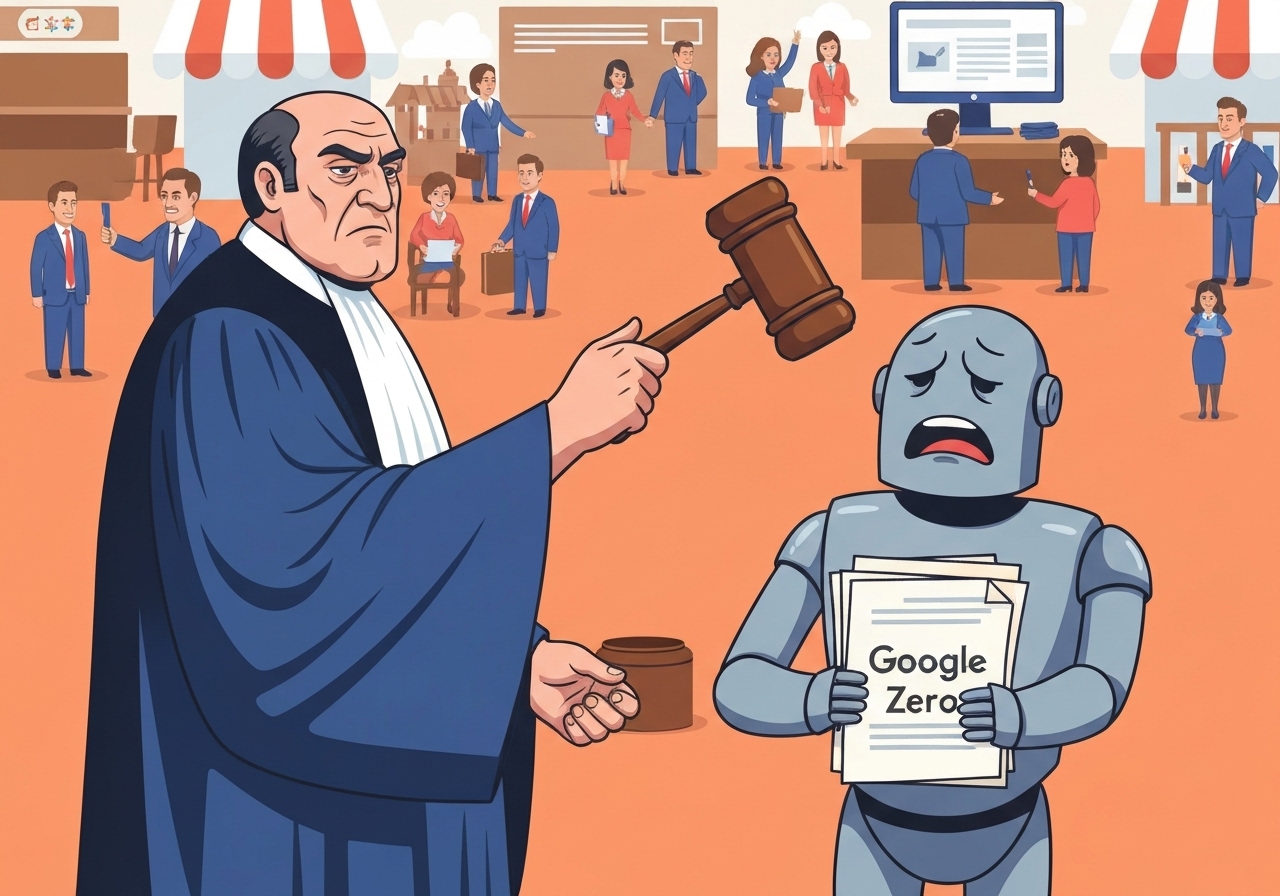
Lead: The European Commission has opened a priority antitrust investigation into Google, examining whether the company used restrictions on web publishers and YouTube creators to gain an unfair edge for its AI features. The probe focuses on Google Search functions such as AI Overviews and AI Mode and on whether YouTube content was fed into generative models without adequate compensation or opt-out options. Regulators are concerned about a possible “Google Zero” outcome, in which Search stops directing traffic to third-party sites, undermining publishers’ revenues. If the Commission finds a breach of competition rules, fines could reach 10% of global annual turnover.
Key Takeaways
- The European Commission has opened a priority investigation into Google over possible competition rule breaches tied to its AI use of publisher and YouTube content.
- The probe examines Search features including AI Overviews and AI Mode and whether web publishers can opt out without losing Search access.
- Regulators are scrutinizing Google’s use of YouTube uploads to train generative AI while reportedly restricting rivals from similar use.
- Potential penalties under EU rules can be up to 10% of global turnover; Alphabet reported $350 billion in 2024, making the ceiling roughly $35 billion.
- The Commission is assessing whether Google provided appropriate compensation or choice to content creators and publishers for AI training use.
- No formal deadline for the investigation has been published; the inquiry is being treated as a priority by the Commission.
Background
Regulators in the EU have become increasingly focused on how major tech platforms integrate artificial intelligence into core products that shape internet traffic and monetization for third parties. Over recent years, publishers and creators have warned that search engines and platforms can siphon traffic away from original sources when aggregating or summarizing content inside search results or feeds. The term “Google Zero” has emerged to describe a scenario where Google’s Search increasingly answers queries directly, reducing clicks through to external sites and therefore trimming ad and subscription revenue for publishers.
Past regulatory scrutiny of Google in Europe covered search ranking, advertising practices, and app marketplaces; those cases set a precedent for close examination of platform conduct that may foreclose competition. Web publishers and news organizations have pressed for clearer rights around content use and for fair compensation where platforms derive value from their work. At the same time, advances in generative AI have increased the commercial value of large-scale text and video training data, intensifying the stakes for both platforms and content owners.
Main Event
The Commission’s inquiry centers on whether Google imposed contractual or technical restrictions that pressured web publishers or YouTube creators to allow their content to be used in Google’s AI features. Investigators will review the mechanics of Google Search features such as AI Overviews and AI Mode to determine if publishers can withhold their material and still retain effective access to Search traffic. The concern is that publishers who refuse inclusion might suffer a reduction in visibility, creating an imbalance of bargaining power.
Separately, the probe will examine YouTube’s stated policies around training AI models: regulators will assess claims that Google permits training on uploaded videos while restricting rival AI developers from using that same material. That asymmetry, the Commission says, could disadvantage other AI firms and entrench Google’s lead in generative services. The investigation is being handled as a priority matter by EU competition authorities, reflecting the perceived urgency of the potential market distortions.
Google faces regulatory exposure under EU competition rules that allow fines up to 10% of global turnover for infringements. With Alphabet reporting $350 billion in 2024 revenue, the theoretical maximum fine would be about $35 billion, though actual penalties would depend on the Commission’s findings and legal calculations. The Commission has not set a formal deadline for concluding the probe; investigations of this type can take many months or longer, and may lead to remedies or fines if breaches are established.
Analysis & Implications
If the EU finds that Google used publishers’ and creators’ material without offering fair compensation or a genuine opt-out, the decision could reshape how platforms negotiate access to content for AI training and in-product summarization. A ruling against Google could force new contractual frameworks, clearer opt-out mechanisms, or monetary compensation schemes for creators and publishers. It might also set a benchmark for later policy across jurisdictions, encouraging similar enforcement elsewhere.
For publishers and creators, a favorable outcome would strengthen bargaining power and could preserve referral traffic and revenue streams for original work. Conversely, a finding that no breach occurred would signal that regulators accept current arrangements, potentially accelerating platform-led AI features that reduce click-through to source sites. The economic consequences for digital journalism and smaller publishers could be material if traffic evaporation continues unchecked.
Competition effects extend beyond media economics. If Google’s access policies give it privileged training data, rivals may struggle to field competitive generative models, reducing innovation and consumer choice in the AI market. The Commission’s probe therefore addresses both upstream data access and downstream impacts on information ecosystems. Any corrective measures will need to balance innovation incentives against the preservation of a diverse online content supply.
Comparison & Data
| Metric | Value |
|---|---|
| Alphabet reported revenue (2024) | $350 billion |
| Maximum EU fine (up to 10% of turnover) | Up to $35 billion |
The table places the headline financial exposure in context: EU competition fines are calculated as a percentage of global turnover for the relevant fiscal period. While the theoretical cap is substantial, actual fines historically are lower and reflect factors such as the duration and gravity of the infringement and any mitigating behavior by the company. Still, the symbolic and practical implications of a multi-billion-dollar ruling would be significant for platform governance and corporate compliance.
Reactions & Quotes
EU officials framed the investigation as protecting democratic values tied to a plural media landscape and open information access. Their public language emphasizes that technological progress should not erode those principles. The Commission highlighted that the inquiry would prioritize whether the balance of power between platforms and content providers undermines the sustainability of independent media.
“A free and democratic society depends on diverse media, open access to information, and a vibrant creative landscape.”
Teresa Ribera, European Commissioner (announcement)
Ribera’s statement underlines the Commission’s broader rationale: protecting information diversity and cultural production as public goods. The comment links competition policy to democratic and cultural concerns rather than treating the case as a narrow commercial dispute.
The Commission also described the probe’s handling as urgent, indicating accelerated case prioritization. That language signals regulators view potential market harm from the platform’s behavior as time-sensitive and of systemic importance.
“The probe is being carried out as a matter of priority.”
European Commission (announcement)
That phrasing increases expectations that the investigation will receive concentrated resources from the Commission’s competition team. It does not, however, set a fixed timeline for conclusion; priority status speeds allocation but not necessarily the total duration of complex inquiries.
Publishers and creators have publicly expressed alarm about reduced referrals and limited control over how platforms repurpose their work. Industry groups have requested clearer opt-out tools and compensation frameworks; those demands are likely to factor into the Commission’s assessment of whether Google’s practices impede fair competition and media sustainability.
Unconfirmed
- Whether Google trained all of its generative models on the full corpus of YouTube uploads remains unconfirmed and under investigation.
- The scale and uniformity of any compensation (or lack thereof) offered to publishers and creators for AI training use have not been independently verified.
- There is no public timetable for the Commission’s final decision; estimates of duration are speculative at this stage.
Bottom Line
The Commission’s priority probe probes a central tension of the AI era: how to harness platform capabilities without hollowing out the independent content ecosystem that feeds them. A finding of unlawful conduct could force contractual and technical changes on Google and influence global norms on data access for AI. Conversely, a clearance would likely embolden platform-centric models that consolidate traffic and training advantages.
For publishers, creators, and rival AI developers, the investigation is a pivotal test of whether existing competition rules can address the downstream effects of AI integration in search and content platforms. Observers should watch for interim remedies, commitments, or formal charges, all of which will shape commercial negotiations and regulatory responses across jurisdictions.