
Lead
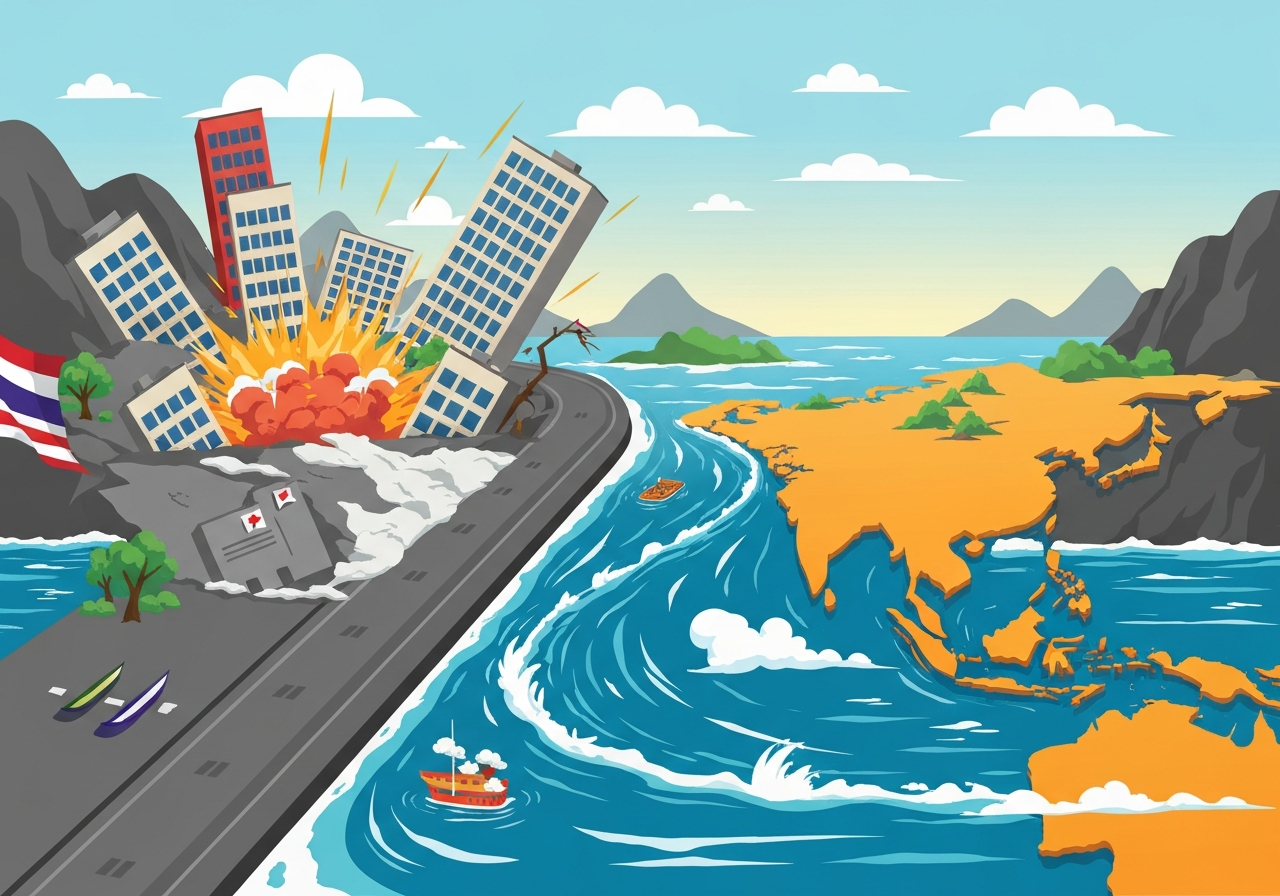
Early on Monday, a magnitude 7.8 earthquake struck off Mindanao, Philippines, killing at least 15 people and inflicting heavy structural damage in southern towns including General Santos. The United States Geological Survey recorded the event shortly before 07:40 local time (23:40 GMT Sunday). The quake set off more than an hour of aftershocks and prompted tsunami warnings for parts of the Philippines, Indonesia, Japan and other regional coasts. Emergency services activated evacuation orders for coastal provinces while hospitals and schools in affected areas reported damage and disruption.
Key Takeaways
- The USGS measured the mainshock at magnitude 7.8, striking off southern Mindanao shortly before 07:40 local time on June 8, 2026.
- At least 15 fatalities have been reported so far, with damage concentrated in General Santos, a city of about 722,000 residents.
- PHIVOLCS recorded more than an hour of aftershocks; local intensity in parts of Soccsksargen was described as “very strong.”
- Tsunami alerts covered multiple countries; the Pacific Tsunami Warning Center warned waves up to 3 metres were possible for the Philippines, and up to 1 metre for parts of Indonesia and Malaysia.
- By midday Philippine time (04:00 GMT), PTWC said the tsunami threat had mostly passed, though localized waves up to 0.83 metres were observed in Northern Sulawesi.
- State agencies report around 3.2 million students and 128,000 teachers and school personnel were affected by closures on what was the first day of the school year.
- Critical infrastructure damage included partial collapses, smashed windows, caved-in roofs and severe impact to parts of St. Elizabeth Hospital in General Santos.
Background
The southern Philippines sits along complex tectonic boundaries where the Philippine Sea Plate, Sunda Plate and smaller microplates interact. Earthquakes of high magnitude are not uncommon in the region, and coastal communities have a recurring exposure to both shaking and tsunami risk. Prior events have shown that even offshore earthquakes can produce destructive local tsunamis and generate strong coastal currents that endanger harbours and low-lying settlements.
The country’s disaster agencies — notably the Philippine Institute of Volcanology and Seismology (PHIVOLCS) and the National Disaster Risk Reduction and Management Council (NDRRMC) — maintain protocols for rapid alerts and evacuations, but the geography of Mindanao, with many islands and coastal communities, complicates timely movement of people and resources. The earthquake occurred on the first day of classes nationwide, creating additional strain on emergency response and sheltering as schools are often used for evacuations.
Main Event
The mainshock occurred off the southern coast of Mindanao and was followed by sustained aftershocks for over an hour, according to PHIVOLCS. General Santos, in the Soccsksargen region, reported some of the most visible damage: multi-storey buildings partially collapsed, roofs caved in and windows shattered. A three-storey commercial building housing a well-known fast-food outlet fell in on itself, sending debris into nearby streets and prompting rescue and clearing operations.
Local authorities ordered immediate evacuations for nine provinces and urged residents in harbours and shallow coastal waters to move vessels away from the waterfront and seek higher ground. Parts of St. Elizabeth Hospital in General Santos sustained severe damage, forcing medical staff to evacuate patients and provide temporary care outdoors while assessing structural safety.
President Ferdinand Marcos Jr. directed the Office of Civil Defence and the NDRRMC to mobilize disaster response teams and ordered the closure of schools in affected areas. He emphasized public safety in official remarks and appealed for strict adherence to tsunami advisories as agencies monitored sea-level data and coastal conditions.
Analysis & Implications
The immediate human toll and infrastructure damage highlight persistent vulnerabilities in southern Philippines’ urban and coastal planning. General Santos’ dense population and a mix of older structures contribute to elevated risk when strong shaking occurs. Hospitals and schools doubling as shelters magnify the social impact when those buildings are themselves damaged.
Economically, the disruption to transportation, fishing and local commerce may be significant in the short term. Coastal communities dependent on small-scale fisheries face interrupted livelihoods if harbour infrastructure or boats are damaged; authorities’ advisories to secure vessels aim to reduce this secondary loss. The timing on the country’s school opening raises concerns about continuity of education for millions of students and the logistical burden of relocating classes or establishing temporary learning spaces.
Regionally, the event underscores the challenge of forecasting local tsunami impacts from large offshore quakes. While PTWC issued conservative maximum-wave scenarios — as high as 3 metres in parts of the Philippines — observed maximum waves in neighbouring Indonesian waters were much smaller (0.83 metres), illustrating how rupture characteristics and coastal bathymetry produce highly variable outcomes. This variability complicates evacuation decision-making and highlights the importance of local monitoring and clear communication.
Comparison & Data
| Metric | Reported value (this event) |
|---|---|
| Magnitude (USGS) | 7.8 |
| Reported deaths (initial) | At least 15 |
| Students affected by school closures | Approximately 3.2 million |
| PTWC predicted max wave | Up to 3.0 metres (Philippines) |
| Observed max wave (Northern Sulawesi) | 0.83 metres |
The table summarizes core verified figures from monitoring centers and government reports. Differences between predicted and observed wave heights reflect complex ocean responses; local bathymetry, coastline shape and the earthquake’s rupture dynamics can all amplify or reduce wave heights at specific locations.
Reactions & Quotes
Please heed the tsunami warning. Move to higher ground now. Do not wait. Your life is more important than anything left behind.
President Ferdinand Marcos Jr. (official address)
President Marcos’ plea accompanied government orders to close schools and deploy civil defence teams. The emphasis on immediate evacuation reflects both the earthquake’s strength and the uncertain coastal response to the offshore rupture.
Owners of boats in harbours, estuaries or shallow coastal water of the above-mentioned provinces should secure their boats and move away from the waterfront.
PHIVOLCS advisory (agency statement)
PHIVOLCS and local authorities provided procedural guidance for coastal residents and vessel owners to reduce secondary maritime damage and improve safety during the initial emergency phase.
The cars on the road were moving erratically. I am lucky they didn’t crash against each other.
Mary Ann Blanco Rhudy, Notre Dame of Dadiangas University (witness)
Eyewitness accounts from General Santos describe violent shaking and visible structural damage, corroborated by social-media footage and photographs shared by local agencies and news photographers.
Unconfirmed
- Exact final casualty and injury counts remain provisional as rescue and accounting operations continue in damaged towns.
- Detailed causes for the collapse of specific buildings (structural failure, construction quality, liquefaction) have not yet been confirmed by engineering assessments.
- No comprehensive estimate is yet available for total economic losses to fisheries, transport and private property across all affected provinces.
Bottom Line
The magnitude 7.8 offshore quake on June 8, 2026 caused confirmed fatalities, concentrated structural damage in southern Mindanao and broad tsunami alerts across the region. Immediate priorities are search and rescue, medical care for the injured, safe evacuation of coastal communities and rapid damage assessments to restore critical services. Authorities have issued clear evacuation orders and closed schools to reduce risk, but the large number of affected students and the scale of infrastructure damage will complicate short-term relief and recovery efforts.
Looking ahead, recovery will require coordinated national and local response, targeted engineering inspections of damaged buildings and accelerated support for displaced residents and affected livelihoods. Regional warning systems and local preparedness measures likely averted greater loss of life from tsunami impact, but the event underlines persistent resilience gaps in coastal and urban planning that policymakers will need to address.
Sources
- Al Jazeera (international media report)
- United States Geological Survey (USGS) (seismological monitoring)
- PHIVOLCS (Philippine Institute of Volcanology and Seismology — official)
- Pacific Tsunami Warning Center / NOAA (tsunami forecasting — official)
- Philippine News Agency (state-run news service)