
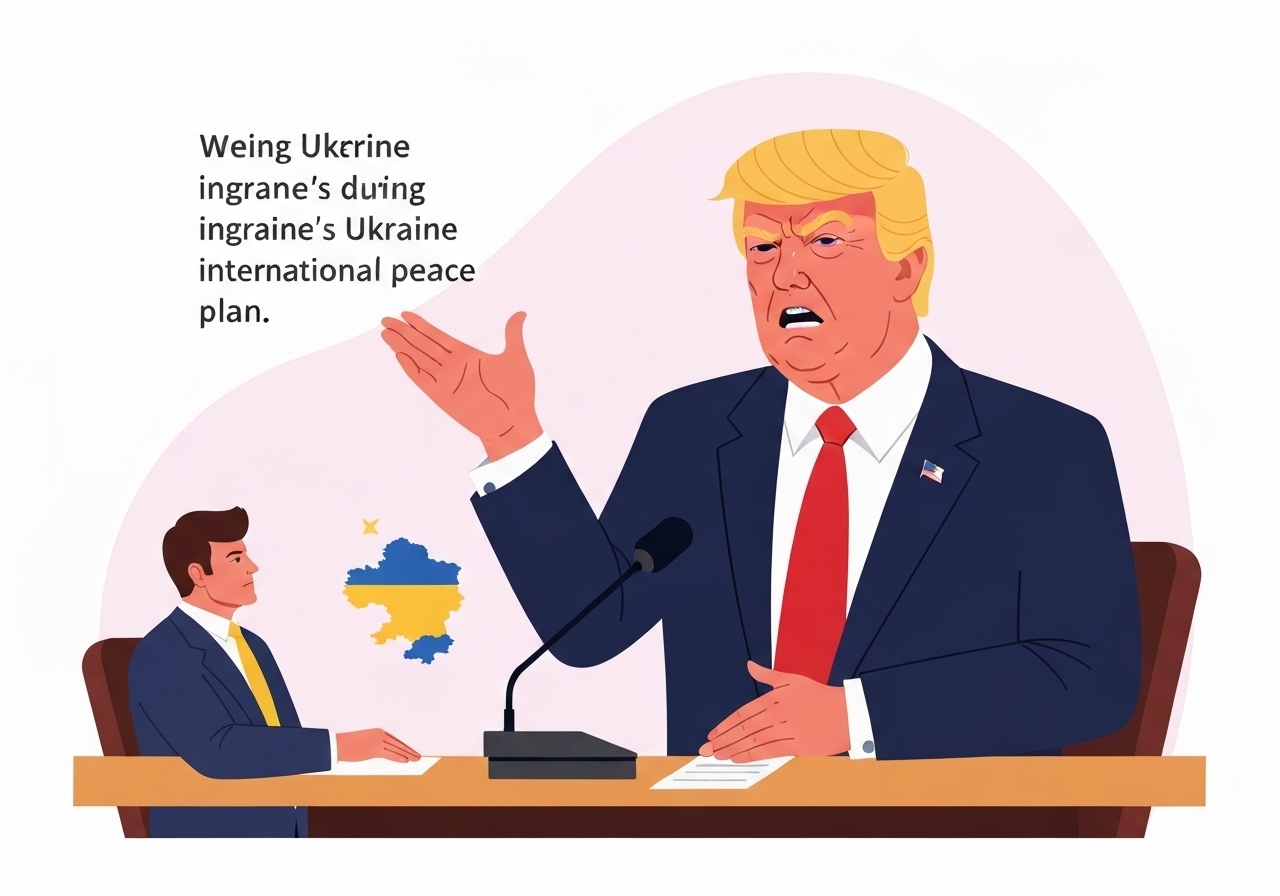
Lead: On Sunday, as negotiators from the United States, Ukraine and other countries convened in Geneva, President Donald Trump said Ukraine had shown “zero gratitude” for a US-backed peace plan that would require major concessions to Moscow. The proposal — reported as a 28-point text — envisions territorial and security compromises by Kyiv and has prompted immediate pushback from European leaders. Questions over the document’s authorship and language have intensified the diplomatic debate. The talks proceeded amid contradictory public statements from US officials and cautious responses from Kyiv and EU capitals.
Key Takeaways
- A 28-point proposal being discussed in Geneva would ask Ukraine to cede territory to Russia, limit its armed forces and forgo NATO membership, according to participants.
- Polish president Donald Tusk publicly asked where the plan originated after suggestions it may have been drafted in or for Moscow.
- Kirill Dmitriev and Steve Witkoff have been named in reporting as contributors to the text; senators say Marco Rubio first described the document as not originally American.
- Trump later said the proposal is “not my final offer” and retreated from an earlier demand for a Thursday deadline for President Zelenskyy to sign.
- European Commission president Ursula von der Leyen and German chancellor Friedrich Merz warned the draft curtails sovereignty and that changes to borders cannot be accepted by force.
- Ukrainian officials led by Andriy Yermak engaged with the US and European counterparts in Geneva while public debate over the plan’s provenance continued.
Background
The proposal comes against the backdrop of Russia’s full-scale invasion of Ukraine in 2022 and years of tense negotiations over Europe’s security architecture. Russian demands to push NATO back to its 1997 footprint and to limit Ukraine’s security ties predate the 2022 offensive; analysts say elements of the plan echo those earlier positions. Western governments have long insisted that any territorial settlement must be voluntary and respect international law, while Russian officials frame territorial concessions as compensation for perceived security threats.
Inside Washington, the plan has exposed fractures across the US foreign-policy establishment and between the White House and some Republican senators. Trump’s public messaging — particularly his comments on social media attributing blame to his predecessor for US support to Ukraine — has added to diplomatic friction. Kyiv faces acute strategic choices: seek an immediate end to widespread destruction or risk accepting terms that could reshape its sovereignty and security guarantees for decades.
Main Event
In Geneva, US, Ukrainian and international delegates met to discuss the package reportedly comprising 28 points that would set conditions on Ukraine’s armed forces, territorial status and future alliances. The US delegation included special representative Steve Witkoff and, according to reporting, the army secretary Dan Driscoll; the Ukrainian side was led by President Zelenskyy’s chief of staff, Andriy Yermak. Delegates from France, Germany and the UK held preliminary bilateral talks with the Kyiv team before the multilateral session.
Public attention quickly shifted to the plan’s provenance after Poland’s president Donald Tusk asked where it had originated, and senators relayed comments they said Marco Rubio made, suggesting the text was not an American draft. Rubio later said the US did “author” the proposal but had taken “input” from both Russia and Ukraine. Media reports have named Kirill Dmitriev as a Russian-linked drafter alongside Witkoff, and linguistic analysis has raised questions about whether the English text was translated from Russian.
Facing criticism, Trump moderated an earlier timeline for a Ukrainian signature and described the plan on social platforms as a negotiation baseline rather than a final settlement. European leaders were publicly skeptical: Ursula von der Leyen stressed that borders cannot be redrawn by force and warned that capping Ukraine’s military would leave it vulnerable. Chancellor Merz said reaching an agreement this week was unlikely given outstanding differences.
Analysis & Implications
The emergence of a draft that appears to incorporate Moscow’s priorities — if confirmed — would represent a major diplomatic shift and could set an unsettling precedent for handling aggression in Europe. Accepting territorial changes under external pressure risks undermining the post-Cold War order that has constrained interstate conquest and preserved borders across the continent. European officials argue that endorsing such terms would incentivize future territorial coercion elsewhere.
For Ukraine, the proposed concessions would force a stark trade-off: immediate reductions in violence and potential relief versus long-term strategic vulnerability, especially if limits on troop levels and NATO ties remain formalized. Security scholars warn that reducing a country’s defensive capacity without durable guarantees invites renewed aggression; Kyiv has underscored the need for robust assurances in any settlement. The plan’s restriction on NATO basing and on western peacekeepers would substantially alter the alliance’s deterrence posture in eastern Europe.
Domestically in the United States, the episode highlights tensions between the executive office, Congress and allied capitals. Some Republican senators pushed back on text they view as tilting toward Russian demands, while the White House has attempted to portray the document as a US effort to close the war. How Washington navigates these internal divisions will shape NATO unity and the credibility of future US-led diplomacy.
Comparison & Data
| Issue | Draft Plan (reported) | European/Ukraine position |
|---|---|---|
| Territorial changes | Recognises some Russian control over disputed areas | Borders cannot be altered by force; status quo preferred |
| NATO membership | Ukraine barred from joining NATO | Ukraine’s sovereignty to choose alliances; NATO open-door upheld |
| Armed forces | Caps on Ukraine’s military size | No unilateral caps; need for credible defense capability |
The table summarizes key reported divergences between the plan’s provisions and positions publicly stated by EU and Ukrainian officials. These contrasts underscore why European capitals are seeking to reshape the draft if talks continue: Brussels and Kyiv view several clauses as incompatible with long-term security and international law.
Reactions & Quotes
European leaders reacted swiftly, emphasizing legal and security limits. Below are three representative public responses with context.
Before quoting von der Leyen, officials had already signalled that the commission would not accept territorial revisions imposed by force and warned about weakening Ukraine’s deterrence.
“Borders cannot be changed by force; limiting Ukraine’s armed forces would leave it vulnerable to future attack.”
Ursula von der Leyen (European Commission president)
Poland’s president framed the authorship question as central to any credible negotiation, reflecting Warsaw’s concern about clandestine influence over the process.
“It would be good to know for sure who is the author of the plan and where was it created.”
Donald Tusk (President of Poland)
Trump’s public posts shifted blame for the war and criticized prior US policy, framing his plan as an effort to end the conflict quickly even as he resisted assigning sole blame to Russia.
“UKRAINE ‘LEADERSHIP’ HAS EXPRESSED ZERO GRATITUDE FOR OUR EFFORTS, AND EUROPE CONTINUES TO BUY OIL FROM RUSSIA.”
Donald Trump (US President, social media post)
Unconfirmed
- Exact origin of the 28-point draft: reports name Kirill Dmitriev and Steve Witkoff, but independent verification of full authorship is not publicly available.
- Whether the text was deliberately leaked by Moscow to influence Western response remains unproven and contested among officials.
- Precise territorial lines and the full list of concessions in the document have not been officially published and remain subject to negotiation and possible revision.
Bottom Line
The Geneva talks revealed more about the political fault lines than about a ready-made settlement: while the US has presented a negotiating framework, disagreements over the document’s origin and substance have undercut a unified western approach. European leaders have made clear that any agreement must respect international law and Ukraine’s right to choose its alliances; Kyiv has signalled it will resist terms that permanently weaken its defense or cede sovereign territory without credible guarantees.
Going forward, outcomes will depend on whether the draft is amended in ways that restore Ukrainian sovereignty and reassure NATO members, or whether political pressure leads to a rushed compromise. The situation remains fluid: diplomats will likely continue to rework language, and any final proposal would require not only Kyiv’s assent but also sustained backing from key allies to be viable.
Sources
- The Guardian (news outlet reporting on Geneva talks and associated statements)
- European Commission press releases (official statements on EU foreign policy)
- X (formerly Twitter) posts by public officials (public social media statements from leaders including Donald Tusk)
- Truth Social (platform for the US president’s public posts)