
Lead
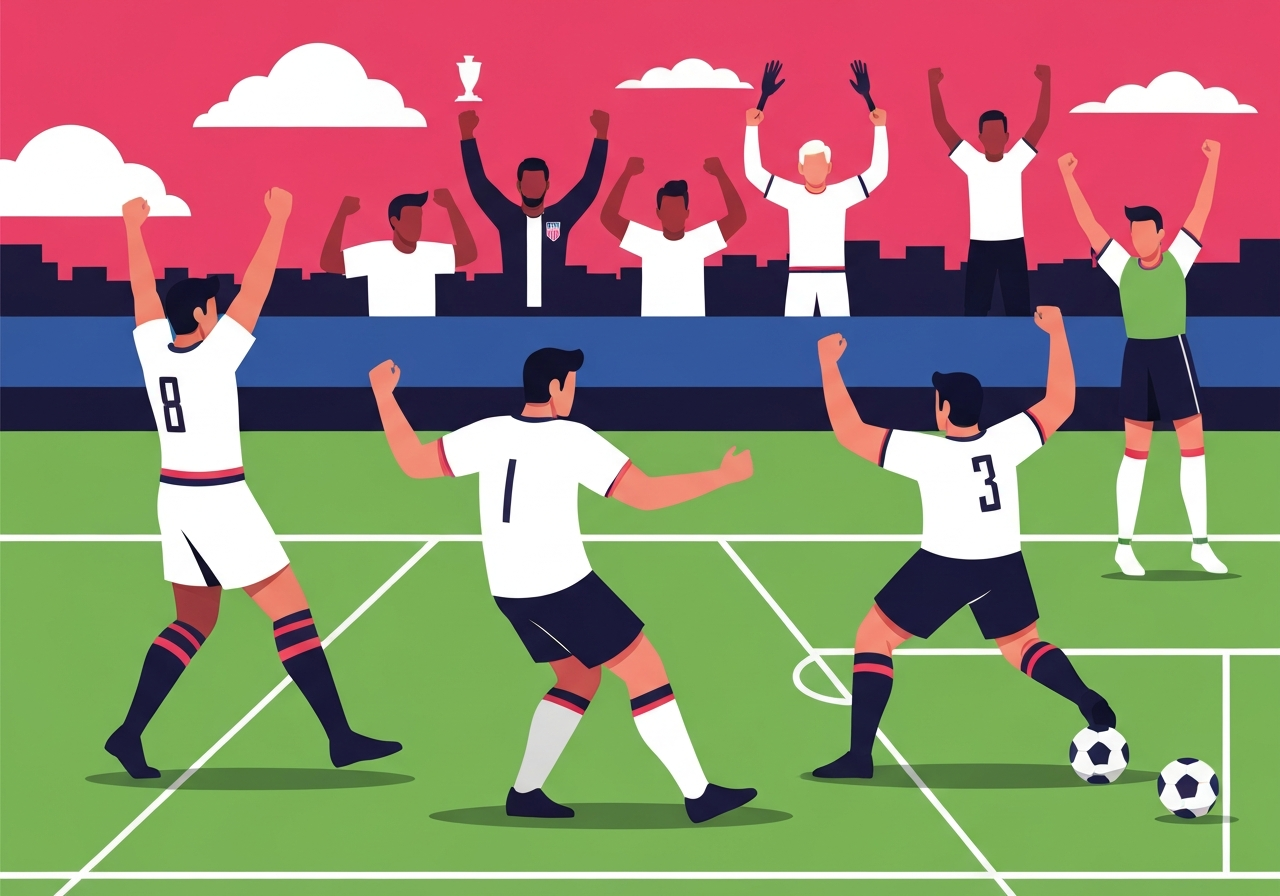
On Friday in Seattle, the United States beat Australia 2-0 at Lumen Field to secure a place in the FIFA Men’s World Cup knockout round after just two matches. Cameron Burgess’ 11th-minute own goal and an Alex Freeman header just before halftime produced the margin. Paraguay’s late 1-0 win over Turkey ensured the U.S. topped Group D early, rendering the final group match moot. The performance, attendance of 66,925 and the team’s pressing style marked a distinctive, dominant turn for the Americans.
Key Takeaways
- The U.S. defeated Australia 2-0 in Seattle; goals came via an 11th-minute own goal (Cameron Burgess) and an Alex Freeman header before halftime.
- The Americans became the first team in World Cup history to benefit from own goals in consecutive matches.
- Paraguay’s 1-0 win over Turkey late Friday clinched Group D for the U.S., making the final group game in Los Angeles irrelevant to advancement.
- Attendance was 66,925; the U.S. is now 7-0-0 all-time in matches played in Seattle/Lumen Field venues.
- Christian Pulisic sat out with a calf injury aggravated in the prior match; the squad’s depth — including Ricardo Pepi and Folarin Balogun — produced the result.
- The U.S. has scored six goals in two matches in this tournament, approaching the team’s historical single-tournament ceiling of seven goals.
- Goalkeeper Matt Freese faced limited action as the U.S. controlled possession and nearly doubled Australia in attempts on goal.
Background
For decades, the United States was often an underdog in global men’s soccer despite the country’s sporting prominence. Historically, U.S. progress in World Cups frequently hinged on third-game outcomes and tight group finishes rather than early dominance.
The 2026 tournament has shown a different script so far: under coach Mauricio Pochettino, the team has adopted a more aggressive, high-pressing approach that prioritizes possession and quick transitions. That tactical shift, combined with a deeper roster and home matches on U.S. soil, has raised expectations that earlier squads did not carry.
Seattle has long been a supportive venue for U.S. national teams, and the city’s strong turnout and atmosphere have been notable in this edition. The combination of tactical change, crowd presence and improved finishing has helped the team to a historic start.
Main Event
The match opened with the U.S. on the front foot. In the 11th minute a cross from Folarin Balogun intended for Ricardo Pepi deflected off Australian defender Cameron Burgess and into the net for an own goal, giving the Americans an early lead.
As play continued, the U.S. sustained pressure and created multiple chances. Alex Freeman extended the lead just before halftime by heading in a deflected attempt that initially was ruled offside; video review then showed Freeman was onside when Sergiño Dest’s shot left his foot, and the goal stood.
The second half was more measured. Australia had moments that tested the American defense, but the U.S. retained control of possession and limited genuine threats on Matt Freese’s goal. Substitutes and teammates celebrated Freeman’s score enthusiastically in the north end, reflecting the stadium’s charged mood.
Christian Pulisic remained sidelined with a calf issue that flared in the win over Paraguay; the team nevertheless produced a balanced attacking performance with Ricardo Pepi and Balogun sharing offensive duties. Statistically, the Americans doubled Australia in shot attempts and kept the match tempo largely under their control.
Analysis & Implications
Tactically, the U.S. has shifted from reactive setups of past tournaments to an assertive press that forces opponents into mistakes in high areas. That strategy contributed directly to the own-goal opener against Australia and explains the sustained possession figures across two matches.
Depth is a central takeaway. With Pulisic unavailable, other forwards and attacking midfielders have stepped up, demonstrating roster flexibility. That reduces reliance on one star and gives coach Mauricio Pochettino multiple viable lineups heading into the knockout stage.
Clinching advancement after two games changes the U.S. approach to its final Group D fixture: rotating players to manage fatigue and injuries becomes a logical priority. It also gives tactical freedom to experiment with personnel and structure without jeopardizing progression.
Internationally, a dominant U.S. start raises the team’s profile as a potentially deep run contender. Domestically, sustained home results and packed stadiums can amplify economic benefits for host cities and energize fan engagement ahead of later knockout fixtures.
Comparison & Data
| Metric | Value |
|---|---|
| Score vs Australia | 2-0 |
| Attendance | 66,925 |
| Goals by U.S. in tournament after 2 matches | 6 |
| All-time U.S. best in one World Cup | 7 goals (single tournament highest) |
The table underscores how efficiently the United States has started this World Cup relative to its own historical benchmarks. Six goals after two matches is a high-output pace compared with previous tournaments and explains growing external optimism about the team’s prospects.
Reactions & Quotes
Players, coaches and opposing staff offered measured responses that reflected respect for the result and the performance.
“For me growing up, history is always the winners are remembered. I’m aware the country is supporting us and the country is proud of us in each game.”
Folarin Balogun, U.S. forward
Balogun framed the win as part of a larger historical narrative that motivates the squad.
“I think we need to keep believing and approach every single day like we were approaching from day one.”
Mauricio Pochettino, U.S. coach
Pochettino emphasized focus and daily progress even after early qualification for the knockout stage.
“You’ve got to give them credit as well. There is a reason why they are so good.”
Tony Popovic, Australia coach
Popovic acknowledged the quality and intensity of the American side while noting areas Australia sought to exploit.
Unconfirmed
- Whether Christian Pulisic will be cleared to play before the knockout round remains undecided pending medical updates.
- Any final roster or tactical adjustments for the round of 16 have not been confirmed by the coaching staff as of Friday night.
- Venue details for potential later-stage matches involving the U.S. are subject to tournament scheduling and are not yet finalized.
Bottom Line
The United States’ 2-0 win over Australia in Seattle is a clear statement: this team is playing with intensity, tactical purpose and roster depth that were less visible in past World Cups. Clinching a knockout berth after two matches reduces short-term pressure and allows rotation to preserve key players.
How the U.S. manages injuries, rest and tactical choices now will shape how deep it can go. If the team maintains pressing intensity, continues to convert created chances and keeps defensive discipline, a deeper run is plausible. The next weeks will test depth, adaptability and whether this early dominance translates into knockout-stage success.
Sources
- The Seattle Times — local newspaper (match report and quotes)