
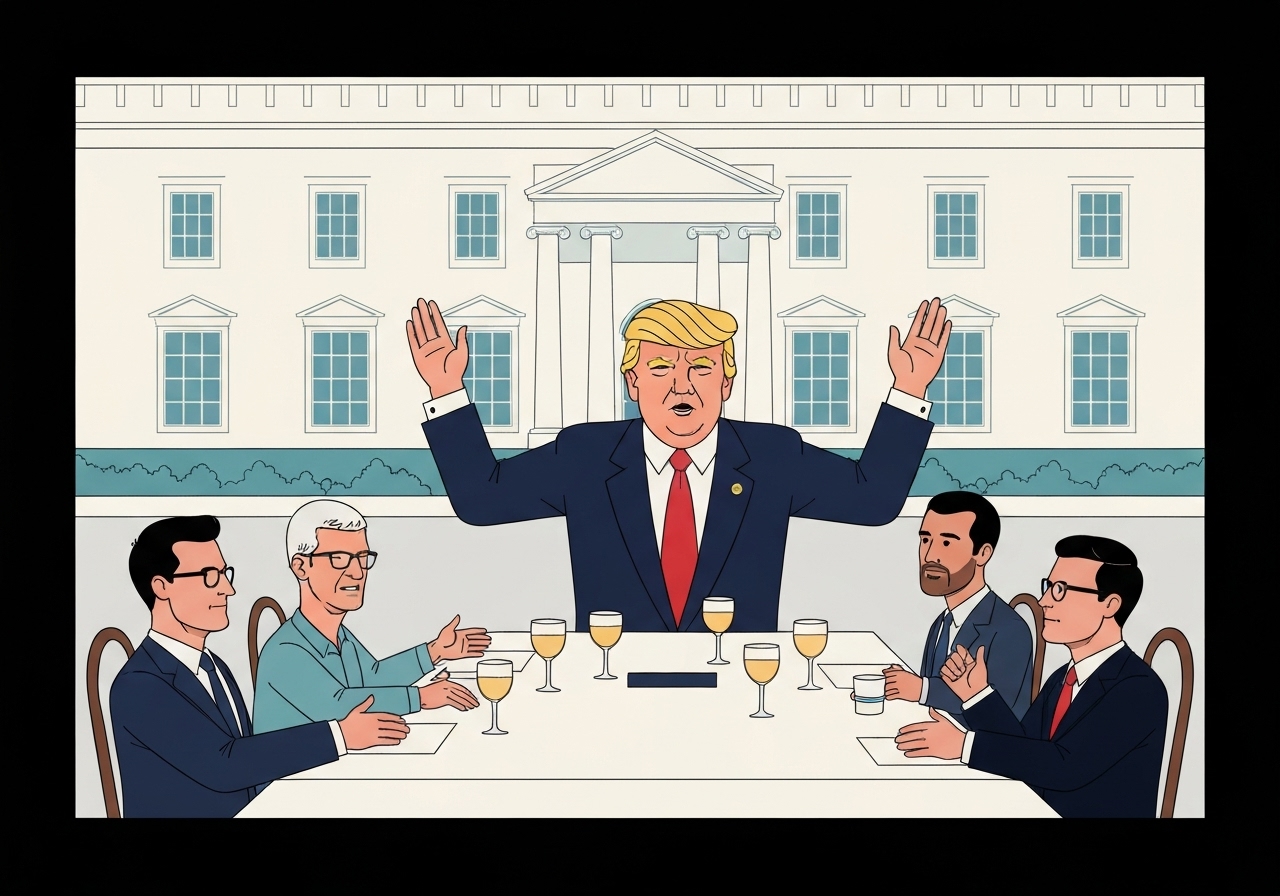
On Sept. 5, 2025, senior figures from the technology industry—including Sam Altman and Apple CEO Tim Cook—attended a White House dinner focused on artificial intelligence and publicly expressed support for President Trump’s policies, while discussing major US investments and partnerships linked to AI and education.
Key Takeaways
- Top tech executives gathered at a White House AI dinner and task-force meeting on Sept. 5, 2025.
- Tim Cook reiterated a pledge to expand US manufacturing and credited the administration for enabling large investments.
- Google pledged $1 billion for US education and job training, with $150 million earmarked for AI grants.
- Meta’s recent hire of Alexandr Wang followed a $14.3 billion investment for a 49% non‑voting stake in Scale AI.
- Bill Gates highlighted AI’s potential in health while also urging continued support for global health programs.
- Officials discussed proposed export levies affecting GPUs and broader industrial policy toward China.
- Several attendees hold formal advisory roles with the administration, including David Sacks as PCAST chair.
Verified Facts
Business and tech leaders gathered for an event at the White House on Sept. 5, 2025, described by organizers as focused on AI and education. Attendees named in reporting included Sam Altman, Tim Cook, Mark Zuckerberg, Sundar Pichai, Bill Gates, Alexandr Wang, Lisa Su, Chamath Palihapitiya, David Sacks, Cameron Wilson and Satya Nadella.
Apple CEO Tim Cook told the room he valued the administration’s role in creating conditions for major US investments; earlier in 2025 he had announced plans to invest roughly $600 billion in US manufacturing. In August, Cook presented the president with a glass plaque set on a 24‑karat gold base, a gesture reported at the time.
Google said it would commit $1 billion to US education and job training; of that amount, $150 million was specified for AI-focused grants to support schools and workforce programs. As part of those commitments, Code.org was reported to receive $3 million from Google for K–12 computer science access.
Meta has moved aggressively into AI hiring and research: the company invested $14.3 billion for a 49% non‑voting stake in Scale AI and brought Alexandr Wang to Meta as chief AI officer to lead its Superintelligence Labs, according to reporting. Mark Zuckerberg, seated near the president at the dinner, thanked the White House for hosting and emphasized company investments in US infrastructure.
Microsoft and other executives thanked the administration for policy steps they said strengthen the US position in AI technology. Separately, the administration has discussed measures affecting GPU exports to China, with reports noting proposed levies around 15% in talks involving AMD and Nvidia.
Context & Impact
The gathering underscores how senior tech leaders and the White House are aligning on AI investment, workforce development and industrial policy. Large corporate pledges toward domestic manufacturing and education signal private-sector support for government initiatives that aim to keep advanced computing and AI development onshore.
Those commitments could accelerate AI adoption in classrooms and clinics, and they may influence supply-chain decisions for chips and data-center infrastructure. However, trade measures such as proposed GPU levies introduce friction with international partners and could reshape hardware sourcing.
- Education: corporate grants aim to expand AI literacy and job pipelines.
- Manufacturing: pledged capital could boost domestic advanced manufacturing.
- Trade: export levies on GPUs would affect global supply chains and partner relations.
Official Statements
“I want to thank you for setting the tone such that we could make a major investment in the United States,”
Tim Cook
“Everything you’re doing in terms of setting in place the platform where the rest of the world can not only use our technology, but trust our technology…”
Satya Nadella
“AI…we want a doctor for everyone in Africa,”
Bill Gates
Unconfirmed
- Any formal, binding agreements beyond public pledges—such as legally enforceable commitments on investment timelines—have not been disclosed.
- Reports of a new, comprehensive trade deal on chips or a finalized export levy rate were described as ongoing negotiations, not completed decisions.
- The long-term operational details for pledged education funds (timelines, recipients beyond initial announcements) remain to be published.
Bottom Line
The Sept. 5 White House gathering brought major tech executives together with the president to showcase mutual interests in AI investment, education and domestic manufacturing. Public pledges from companies and supportive comments from executives signal close public‑private coordination, but many implementation details and trade-policy outcomes remain pending.